

Rachel Parodneck & Associates PsychotherapyVirtual Therapy Across New York State
Trauma Therapy in NYC
Trauma is a heavy word. A lot of people land on a page like this and think, I am not sure I qualify - I have never been through anything that bad. You do not need a diagnosis, or a single dramatic event, to work with a trauma psychotherapist.

Big-T and Little-t Trauma
You may have heard trauma described informally as "Big-T" and "little-t." These aren't clinical diagnoses, but the language can be useful for understanding why trauma doesn't always come from one catastrophic event. Single-event and acute trauma, what is often called Big-T, is the kind of event most people picture. Cumulative and relational trauma is quieter and usually repeated - and it can shape a life just as thoroughly.
Single-Event & Acute
- A serious accident or a car crash
- Assault, abuse or violence
- The sudden death of someone close
- A medical emergency or frightening diagnosis
- A disaster, or being present for one
Cumulative & Relational
- Continued criticism from a parent through childhood
- Growing up around unpredictability or walking on eggshells
- Emotional neglect - being fed and clothed but not seen
- Chronic bullying or exclusion
- A long relationship that steadily eroded your confidence

Cumulative and relational experiences rarely feel dramatic enough to name. They still shape your nervous system, your sense of self-worth, and how you do relationships - which is exactly why they are worth bringing to psychotherapy.
Trauma can happen at any point in life. It may involve childhood experiences, sexual or reproductive trauma, medical experiences, sudden loss, an abusive relationship, an accident, or another experience that changed how safe the world - or your own body - felt afterward.
How Trauma Tends to Show Up Later
Often not as memories. More often as a set of reactions that feel bigger than the present moment seems to explain, and that you may have long since decided are simply your personality.
If burnout is the version of this you recognize most, our therapy for burnout page covers that ground. If it is mostly anxiety, start with anxiety therapy.
When You Were the Responsible One
When a child takes on emotional or practical responsibilities that would ordinarily belong to a parent, therapists may describe the pattern as parentification - carrying a parent's emotions, managing the mood of the house, or holding things together for everyone else. At the time it looks like being mature for your age. Later it tends to look like an over-developed sense of responsibility for other people, and very little practice at needing anything yourself.
This is a pattern we frequently encounter in trauma therapy, and it is rarely the thing people come in naming.
A different mask, the same energy
Trauma also has a way of repeating relationship patterns. You find yourself choosing the same partner again and again - often, quietly, the parent you were trying to save. It looks different every time. Underneath, it is the same energy.
Naming that pattern out loud, with someone who is not in it with you, is usually where it starts to loosen.
Trauma, PTSD and Complex PTSD
Some people arrive with a diagnosis of PTSD - flashbacks, nightmares, avoiding anything that brings the event back, a body that will not stand down. Working with a PTSD therapist in NYC who does this every week matters, and it is a large part of what we do.
Others may recognize themselves in what is often described as complex trauma: prolonged or repeated experiences - often interpersonal - that can affect emotional regulation, relationships, self-worth, and a person's sense of identity. Some people find the term complex PTSD helpful; others don't identify with it at all. You don't need to arrive knowing which label fits.
You do not need the right label to start
We are not going to hand you a diagnosis on a first call. A trauma psychotherapist here starts with what your days are actually like, and works out with you what would help. If a name turns out to be useful along the way, we will talk about it then.
What Trauma Therapy Actually Does
A fair question before you book anything: what happens in the room? Trauma therapy here is not re-telling the worst thing that happened to you until it stops hurting. It works on four fronts, at a pace you set.
Understanding protective patterns
The people pleasing, the vigilance, the shutting down - these were solutions once. We start by respecting what they were for.
Recognizing your triggers
Learning what sets the reaction off, and catching it earlier each time.
Steadying your nervous system
Practical regulation skills, so the reaction has somewhere to land other than straight through you.
Processing what is unresolved
When there is enough safety and stability to approach it in a way that feels manageable - without forcing disclosure or moving faster than you're ready for.
You set the pace. You are never required to describe something you are not ready to describe. A first session is far more likely to be about what your week is like than about the worst day of your life.
Therapists Who Do This Work
We are a group psychotherapy practice, so you are matched to a trauma therapist in NYC who genuinely works with this rather than whoever happens to be free. Several of our clinicians specialize in trauma therapy, with particular experience across different types of trauma and life experiences. We'll help you identify who may be the best fit based on your needs, preferences, and current availability. Meet everyone on our therapists page, or let us match you on a consult.
We are in-network with Aetna and Northwell Direct. For other plans we provide monthly superbills for out-of-network reimbursement, and we keep a limited number of sliding-scale spots.

Trauma therapists on our team
Each one brings a particular focus within trauma work.

Chelsea Bonosky, LMSW
Supports clients healing from sexual and reproductive trauma, creating a safe space to process difficult experiences and reconnect with their bodies and sense of self.
Meet Chelsea
Gabriella Giordano, LMSW
Helps clients navigate the intersection of OCD and trauma, understanding how past experiences can shape intrusive fears, anxiety, and patterns that keep them feeling stuck.
Meet Gabriella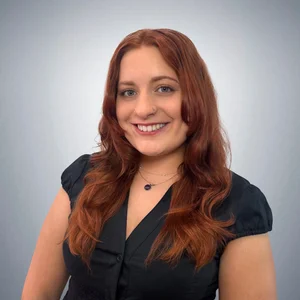
Maya Gauri, LMSW
Helps clients explore and heal from childhood trauma, paying attention to how early experiences and relationships continue to shape emotions, self-perception, and patterns in adulthood.
Meet Maya
Jenna Martinez, LMSW
Helps clients process trauma related to grief, loss, and pivotal life experiences that have changed the course of their lives, creating space to make sense of what happened and move forward with greater clarity.
Meet JennaHow to Start
Book a free consult
Fifteen minutes, no forms, no commitment, and no need to explain everything.
Get matched
Tell us what is going on and we will match you to the right psychotherapist and rate.
Begin therapy
Virtually, anywhere in New York State, at a pace your life can hold.
Frequently Asked Questions
Do I need a PTSD diagnosis to see a trauma therapist?
What is the difference between big-T and little-t trauma?
Will I have to talk about what happened?
Do you work with complex PTSD?
Is trauma therapy available online?
How long does trauma therapy take?
Do you take insurance?
You Do Not Have to Call It Trauma to Start
You can start with what is affecting your life now, and we'll help you figure out what kind of support makes sense.